

Save the Robots
AI 2028 is Automation 1983

Someone suggested to me a research paper this week, Ironies of Automation, as an analogy for what AI might look like in the near future. The irony of the Ironies is that the first site I checked offered me an AI summary of the paper instead.
Presaging their resentments for bourgeoisie and thirst for brutality, Nazi playwright Hanns Johst has a scene in Schlageter (1933) where the protagonist’s friend says, “Whenever I hear the word ‘culture’, I release the safety on my Browning.” Well, whenever I hear the initials AI, I usually lace up my sneakers and run, but I was able to get through this research paper because, at just 5,000 words, it fit within my limited attention span — but only just.

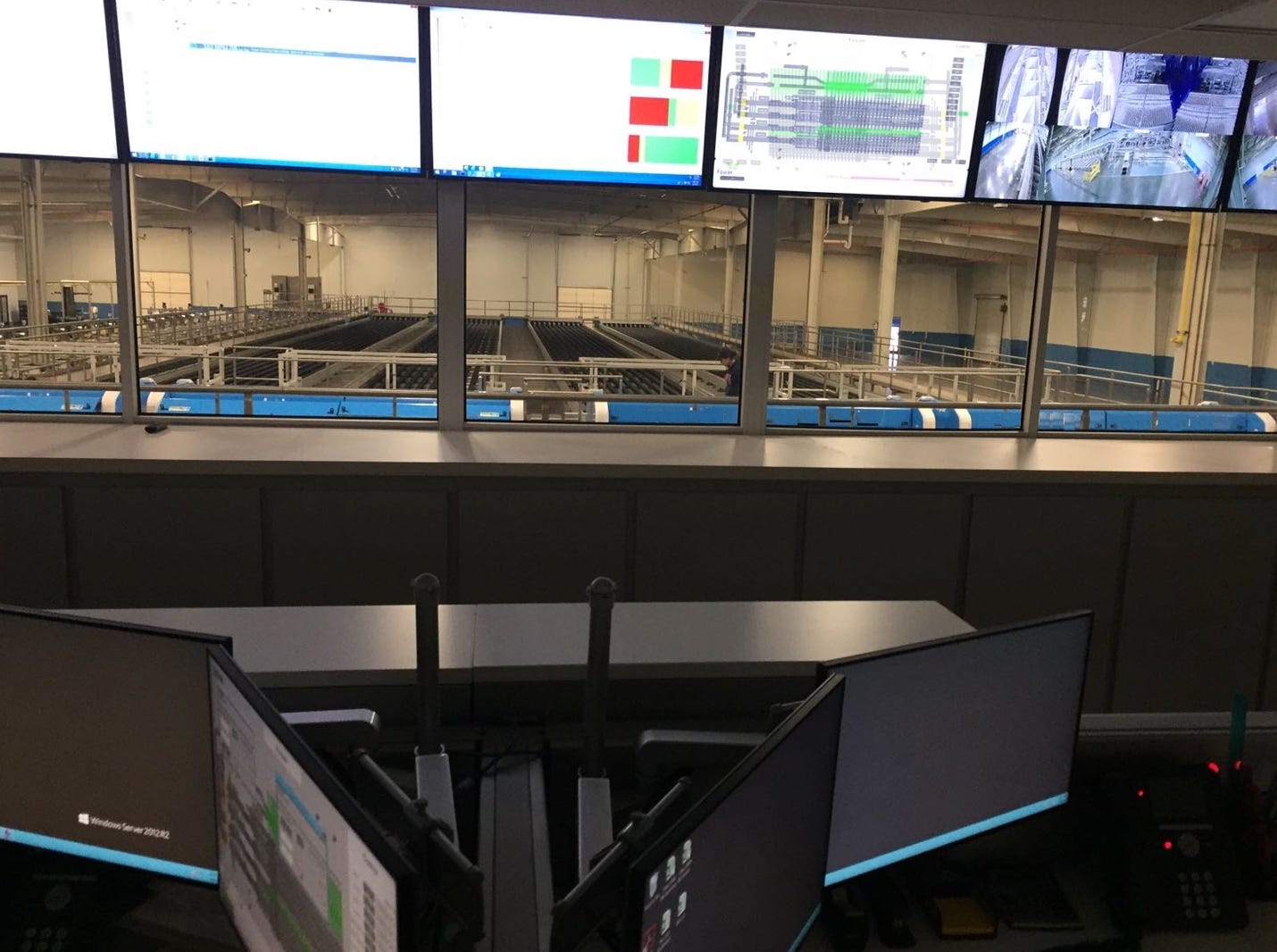
The irony of the irony of the Ironies is that, now, to get any further, I have to produce a short summary, which is what AI offered to do for me. Written in 1983 to address the uptake of industrialization and robotics in manufacturing, author Lisanne Bainbridge argues that automation will reduce operator familiarity with the variety of skills necessary to do it all “by hand” because their work, now, will be to oversee, rather than to do everything, and thus, they will become unpracticed in large parts of the process. So, paradoxically, operators will need to be more trained rather than less so to be ready for rare but crucial interventions. She also argues that operating automated systems imposes a more focused mental load — more exhausting — than doing many different things.
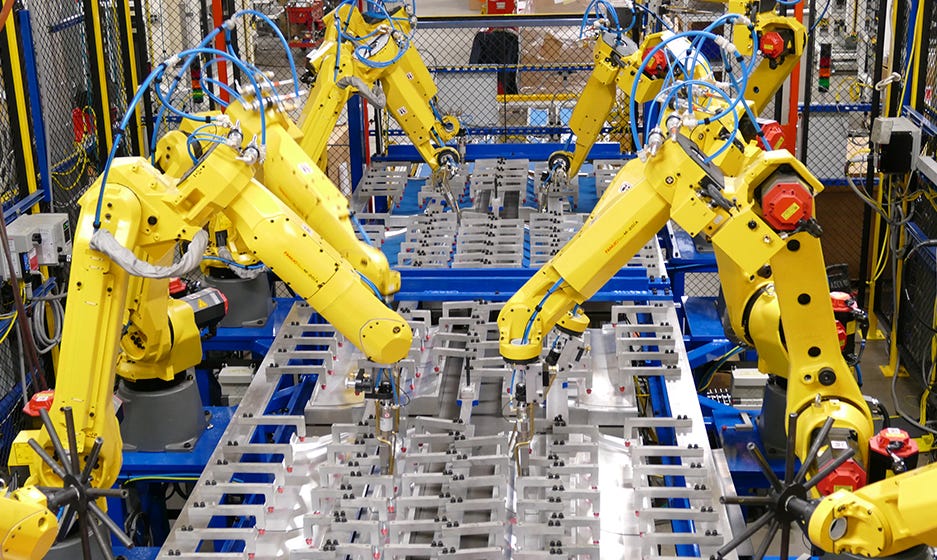
A friend of mine grows peelable mandarins — shameless plug for his product: they’re delicious — and I visited his plant in 1991 while we were in college. On that visit I saw conveyor belts trucking zillions of pounds of fruit before human inspectors who reached into the line and manually extracted defective produce. Imagine Lucy and Ethel at the chocolate factory and you’ve got the picture.
I returned fifteen years later to be astonished. That whole set up had now been replaced by optical scanners that sucked perhaps 10,000 pounds of fruit into something looking like a giant clothes dryer, jiggled it around for a couple seconds, took pictures of it all, and then pitched the pieces that didn’t match between their expected weight to their size — thus indicating frost damage — before it organized them into one of 26 different weight and color categories and put them all in separate bins such that each mesh sack of mandarins, like a bag of Skittles, always contains the exact same combinations of colors and sizes. Replacing perhaps 5,000 heads doing manual labor years before were 2 engineers from UC Davis — our alma mater! — running it all. Bainbridge’s prediction had manifested in real life. And, the growing economy had absorbed all those displaced laborers to do other things, productivity had increased, and all was well.
Admittedly this a hopeful scenario — and I’m proudly both a Luddite and an optimist — but, to me, this actually seems the best fit to the current circumstances. And, if this didn’t properly anesthetize you, and you still want more, I wrote another thing this week — on culture.
