Save the Humans
Chuck Norris Vs. Robots

What do you think will be the biggest problem facing the computing industry in the 90’s? (reporter)
That there are only 17,000 three-letter acronyms (hacker Paul Boutin)
I had my OMG moment with AI this week. This raised mixed emotions. Someone I know from the high-tech industry, a friend, built an MVP, and one ready to be shown to VCs, using only Supabase, Vercel, and Loveable over the weekend while visiting. Produced faster and better than what the developer they have on hire could do, all this could have apparently been done with just Claude but instead they wanted to learn how the component parts of the stack were assembled so they farmed out the various parts to specialty AI companies. A political science major in college, not a computer science one, this person is smart but has no background in software development. And it took just one weekend. That part I can verify.
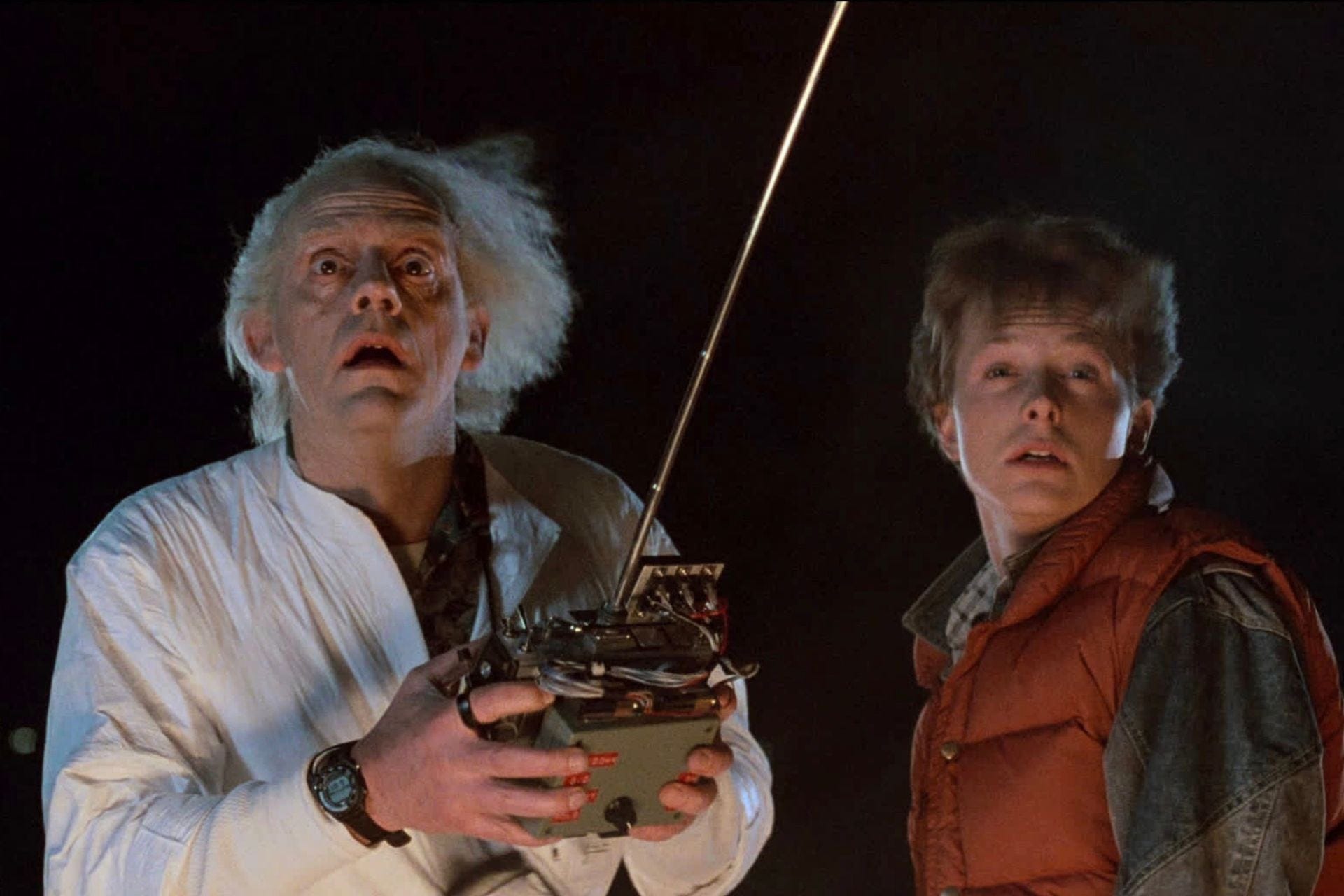
An awkward conversation awaits my friend. One in which the aspiring founder must tell the other person, a seasoned engineer who has been writing code longer than I have been telling jokes, and a veteran of numerous successful start-ups: “Hey, you know the thing you’re halfway done building? Well, I finished it… No, not just the front-end, but the whole thing… and it’s better than yours… Yup, I did it vibe coding… Oh, it took me a weekend… Nope, just one weekend.” I expect the recipient of this information to be equal parts stunned, annoyed, and terrified.

With each new person on the planet, there is yet another potential innovator, each one testing new stuff and building things in their garage. Some of that output, among the billions of duds, will turn out to be really productive hits. And, since I was born, the earth’s population has more than doubled. So, one might expect, now, the pace of progress to have doubled — because there are twice as many tinkerers today. However, with each new technology, each of those innovators gets just a little bit faster too. And, every time they do, the rate at which they innovate also gets just a little bit faster. And each time they do, the rate of everyone’s innovating gets even just a little bit faster yet again. And so on.

Add those two functions together — i.e. the exponential population growth and the ever increasing rate of efficiency expansion — and there will come a time when technological progression achieves criticality; a hyperbolic tipping point. That fact is a mathematical certainty, albeit an uncomfortable one. But, a moment will come when machine knowledge and power will explode from human comprehension faster than we can process the implications of its departure, leaving behind our little biological minds and yielding unknown consequences for government, privacy and employment.

What I witnessed — that a completely finished and integrated front-end, back-end, and database sufficient to form a fully fledged high-tech start-up can all be developed and shipped within one weekend by a layman — has left me convinced that we’re close to that point now, if not having already traversed it. Even the government appears to have thrown in the towel, demanding Anthropic drop its limitations on AI surveillance and autonomous weapons, and then switching over to OpenAI when they refused. The latter is (at least) claiming that it maintained such red lines. In either case, whether the government is so desperate to get the robot without the curbs or that the companies with the robots are so powerful they can tell the government to “beat it” — both suggest the item in question is more powerful than the government.
 Tiktok failed to load.
Enable 3rd party cookies or use another browser
Now working at an OSS nonprofit, I’ve been networking. This week I solicited, by cold calls, two legends of the movement. I’m taking about people like Bruce Perens and Karl Fogel. One told me this week, that with AI, his team of engineers is now producing code at the rate of 20 programmers — each — versus what they could do only about one year ago. And, honestly, that sounds conservative to me. I worked at a FinTech just before this and, although the founder was a fraud (allegedly), the engineers were decent people. At the start-up, it would have taken our team of three engineers — at least — six months to produce what my friend made in just a weekend.

I wonder how long it will take before the robots can manage the robots replacing the engineers at the top of the food chain when every single coder on the planet is now producing at 20 times the rate of one human just two years ago. Did I say there are at least twice as many software engineers in existence now as there were in 1971? I mean, to the extent that there were any software engineers at all back then. But, you get my point. It’s safe to assume it won’t take long and that things are moving a lot faster now than 40 times the rate they were 55 years ago.

Claude 4, released in May 2025, is exponentially better than what was out two years ago. Basically, it took 24 months for AI to go from Atari to Xbox. In no small part that’s because of the efficiency gained by it’s own enhancements. I expect the next release should come even faster and produce a wider performance gap. Did you know that Chuck Norris counted to infinity twice? Also, he doesn’t sleep, he waits. Well, he died this week. And, if that’s not scary enough, now computers that never sleep are on the cusp of being smarter than him. Rest in peace Chuck Norris. I think I’ll go cuddle up with my dog and hide under the covers. That’s what I expect most of us are doing when it comes to AI. At least after what I saw this week.